
How You Can Help End Generational Incarceration

Every mission needs more than intention — it needs people willing to act on it. The Eli-Global Reform Foundation was built on the belief that ending generational incarceration is possible, but only through sustained, collective effort from donors, advocates, community leaders, and everyday supporters who believe families deserve a real second chance. If you’ve read about our mission and found yourself asking “what can I actually do to help?” — here are the answers.

1. Donate to Fund Direct Programs

Financial support is the most direct way to expand our reach. Every contribution helps fund education and job-training initiatives inside correctional facilities, support services for the children and families of incarcerated individuals, advocacy efforts aimed at reshaping policy and the role of Correction Officers, and community partnerships that support successful reentry. Donations of any size move this mission forward — you can give directly through our donation page.

2. Get Involved as a Partner or Volunteer

We’re a coalition by design — bringing together academics, faith-based organizations, correctional professionals, business owners, and community advocates around a shared goal. If your organization, congregation, business, or professional network has resources, expertise, or a platform that could support justice reform, we want to hear from you. Partnership opportunities range from program support to advocacy collaboration to in-kind resources.

3. Spread Awareness

Generational incarceration persists partly because it remains invisible to people outside the communities it affects. Sharing our mission, following us on Facebook, Instagram, and Twitter, and simply talking about the realities of recidivism and family separation helps build the public understanding that meaningful reform requires. Awareness moves policy, and policy moves outcomes.

4. Advocate for Policy Change

Real reform requires public pressure and informed advocacy. Supporting policies that fund education and job training in correctional facilities, encourage improved family visitation practices, and reimagine the role of Correction Officers as active partners in rehabilitation all help create the systemic conditions our mission depends on. Contacting local representatives and supporting organizations that lobby for these changes amplifies our work well beyond what any single foundation can accomplish alone.

5. Support Correction Officers as Partners in Reform

Part of ending generational incarceration means recognizing and equipping the professionals working inside the system every day. Supporting initiatives that provide Correction Officers with the training and resources to take on expanded, rehabilitative roles is a often-overlooked but powerful way to strengthen reform from within.

Every Family Reached Is a Cycle Broken

Our mission is ambitious by necessity — ending a cycle that has persisted across generations requires sustained, coordinated effort. But every family we reach, every incarcerated individual who leaves with a skill and a plan, and every child who gets connected to the support they need is proof that the cycle can be broken.

We can’t do it without people like you.

Take the Next Step

Whether it’s a one-time donation, a recurring gift, a partnership inquiry, or simply sharing our story, there’s a role for you in this mission.

Donate now, explore partnership opportunities, or contact us to learn more about how you can help end generational incarceration, one family at a time.


Punishment Isn’t Working — Why Rehabilitation Is the Future of Justice Reform

For decades, the American approach to incarceration has leaned heavily on a single premise: punishment deters crime, and time served equals justice delivered. If that premise were correct, recidivism rates would be falling. They aren’t. And that gap between intention and outcome is exactly where the Eli-Global Reform Foundation’s philosophy begins.

The Numbers Tell the Real Story

Persistently high recidivism rates are not evidence that people are simply “choosing” to reoffend. They are evidence that the system, as currently designed, does not adequately prepare incarcerated individuals to succeed once they’re released. Simply removing someone from society for a fixed period of time — without addressing the education gaps, job skills, mental health needs, or family disconnection that often contributed to their incarceration — does little to change the trajectory that led them there in the first place.

If we want different outcomes, we need a different model. That model is rehabilitation.

Rehabilitation Is Not a Soft Alternative — It’s the Effective One

There’s a common misconception that rehabilitation-focused reform is somehow “easy” on incarcerated individuals, or that it comes at the expense of public safety. The opposite is true. Rehabilitation is the more rigorous, more demanding path — because it requires actual investment: in education, in job training, in mental health services, and in rebuilding family relationships, rather than simply warehousing people until a release date arrives.

The payoff of doing this work well is measurable: safer jails, increased employment and higher incomes among returning citizens, meaningfully lower recidivism, and less strain on the low-income communities that most incarcerated individuals return to. Public safety and rehabilitation are not competing goals — they’re the same goal, approached correctly.

Addressing Root Causes, Not Just Behavior

Many people cycling through the justice system are there because of circumstances tied to poverty, untreated mental illness, and substance-abuse disorders — not because rehabilitation was attempted and failed. In many cases, it was never attempted at all. Our foundation believes that treating the root cause — not simply the behavior it produced — is the only way to meaningfully break the cycle of incarceration, for the individual and for the generations that follow them.

A Coalition Built for This Work

Meaningful rehabilitation-focused reform doesn’t come from a single policy or a single institution. It requires a coalition: academic and policy experts who understand what works, non-profit, political, and faith-based organizations doing the on-the-ground work, advocates who bring these issues to legislators and public forums, and correctional professionals — including Correction Officers — who are equipped and empowered to be part of the solution, not just the structure surrounding it.

The Eli-Global Reform Foundation exists at the intersection of these groups, working to translate rehabilitation-focused ideas into practical, funded, implemented programs.

The Path Forward

Justice reform that actually reduces recidivism starts with a simple shift in mindset: from “how long should this person be held” to “what does this person need in order to never return.” That shift — from punishment to rehabilitation — is the foundation of everything we advocate for.

Be Part of the Shift

Rehabilitation-focused reform needs advocates, partners, and supporters who believe the current model can and should be better.

See how we approach reform or donate to support rehabilitation-focused programs.

The Hidden Victims: Supporting Children of Incarcerated Parents

When a parent is incarcerated, the sentence rarely ends with them. Spouses, siblings, and — most significantly — children are left to navigate the emotional, financial, and social fallout of an event they had no part in causing. At the Eli-Global Reform Foundation, we call these family members the hidden victims of mass incarceration, and reaching them is central to our vision of preventing generational incarceration before it starts.

A Crisis Hiding in Plain Sight

The scale of this issue is larger than most people realize. Between 50 and 75 percent of incarcerated individuals report having a minor child. Data shows that Latino children are 2.3 times more likely, and African American children 7.5 times more likely, than Caucasian children to have an incarcerated parent. These are not small disparities — they represent millions of children navigating the same hardship with almost no structured support system built around them.

Children with an incarcerated parent commonly face difficulty forming and maintaining relationships, disruptions to normal schooling — including higher rates of suspension and expulsion — behavioral and social challenges, and ongoing economic hardship at home. None of this happens because of anything the child did. It happens because the systems around incarceration were never built with children in mind.

Why Family Support Is the Real Prevention Strategy

Here’s the uncomfortable truth our foundation confronts directly: many children of incarcerated parents go on to become incarcerated themselves. Escaping that outcome is possible — but research and experience both show it is the exception, not the rule, absent real intervention.

The strength and quality of family support available to a child is one of the single biggest factors in whether they overcome these hardships or repeat them. That’s why “working from the outside” is just as critical to our mission as anything we do inside correctional facilities. Prevention on the outside is, in many cases, the most effective way to lower incarceration rates for the next generation.

What Prevention Actually Looks Like

Our vision extends the work of rehabilitation beyond jail walls and into the households and communities most affected by incarceration. That means connecting the children and partners of incarcerated individuals with services that mirror and reinforce what’s happening inside — mentorship, educational support, and community resources designed specifically for families navigating a parent’s incarceration.

It also means recognizing that reconnecting incarcerated parents with their children — through improved, child-friendly visitation and consistent communication — isn’t just compassionate. It’s a proven tool for preventing generational incarceration, because it keeps the family bond intact during the years it matters most.

Catching the Cycle Early

The earlier we reach a child affected by parental incarceration, the more effective prevention becomes. Adolescence is a critical window — the point at which environment and support (or the lack of it) often determines which path a child ultimately takes. Our foundation is committed to reaching families during that window, not after the cycle has already repeated itself.

Help Us Reach More Families

Ending generational incarceration means seeing the whole family — not just the individual behind bars. If you believe children shouldn’t inherit their parent’s sentence, there’s a place for you in this work.

Learn about our vision or donate today to help support the children and families we serve.

Education and Job Training Behind Bars: The Key to Reducing Recidivism

Approximately 85 percent of incarcerated individuals will eventually return home. That statistic alone should shape how we think about incarceration — not as a permanent removal from society, but as a temporary chapter that will, in almost every case, end in reentry. The question the Eli-Global Reform Foundation asks is simple: what happens during that chapter, and does it prepare someone to come home successfully?

Too often, the honest answer is no.

The Problem With Idle Time

Life inside a correctional facility is frequently defined by monotony — long stretches of time with little structure, little purpose, and few opportunities for growth. That idleness doesn’t just make time harder to serve; it actively undermines rehabilitation. Individuals who spend months or years without meaningful education, skill-building, or preparation for employment are released with the same gaps — and often the same circumstances — that contributed to their incarceration in the first place.

The continued high rate of recidivism nationwide is not a mystery. It is a direct reflection of how little structured opportunity exists inside many facilities. Simply releasing someone from jail is not rehabilitation. Without intervention, we are effectively returning people to their communities no more prepared than when they arrived.

What Actually Moves the Needle

Our foundation’s work is grounded in a straightforward belief: education and job training inside correctional facilities are among the most effective, evidence-backed tools for reducing recidivism. When incarcerated individuals gain access to basic education, vocational skills, and structured work-release programs, they leave with more than a release date — they leave with a foundation for employment, stability, and a legitimate path forward.

This matters most for the population we focus on: individuals serving sentences of at least three months but no longer than a year. This window represents a critical opportunity — long enough to deliver meaningful programming, short enough that reentry is imminent and preparation is urgent.

The Ripple Effect

The payoff from investing in education and job training extends well beyond the individual. Safer jails. Higher rates of employment and higher household incomes upon release. Significantly lower recidivism rates. And, critically, a lighter burden on the low-income families and communities that most incarcerated individuals return to — families who are often left to absorb the consequences of a system that didn’t prepare their loved one for reentry.

This is also where generational incarceration takes root or is prevented. A parent who returns home with a job and a stable path forward is far more likely to break the cycle for their children than one who returns to the same circumstances that led to incarceration in the first place.

Innovation Requires Partnership

None of this happens through good intentions alone. It requires close partnership between corrections professionals, policymakers, educators, and organizations like ours that are willing to advocate for and help build these programs from the ground up. The Eli-Global Reform Foundation works at the intersection of these groups — connecting educational, political, and community leaders around a shared goal: proven, practical solutions that reduce recidivism.

Support Education-First Reform

Every program we help advance inside a correctional facility is a direct investment in someone’s second chance — and in the safety and strength of the community they’ll return to.

Read more about our approach or donate now to help expand education and job-training access inside our jails.

Bridging the Gap: Reimagining the Role of Correction Officers

Ask most people what a Correction Officer does, and they’ll describe a job about custody and control — locking doors, running counts, keeping order. That description was accurate decades ago. It is no longer the whole story, and at the Eli-Global Reform Foundation, we believe it’s time the system caught up with the people who actually work inside it.

A More Educated Workforce Than Ever Before

Since 1999, jurisdictions like New York have required a minimum of sixty college credits or an associate degree to become a Correction Officer. Today’s officers frequently hold degrees and specialized training in education, criminal justice, child development, and mental health. This generation of Correction Officers is, by credentials alone, one of the most educated in the country’s history.

Yet the job description hasn’t caught up with the workforce. Officers are still primarily defined by “Care, Custody, and Control” — a framework written for a different era, one that underuses the very skills these professionals now bring to the job.

From Custodian to Counselor

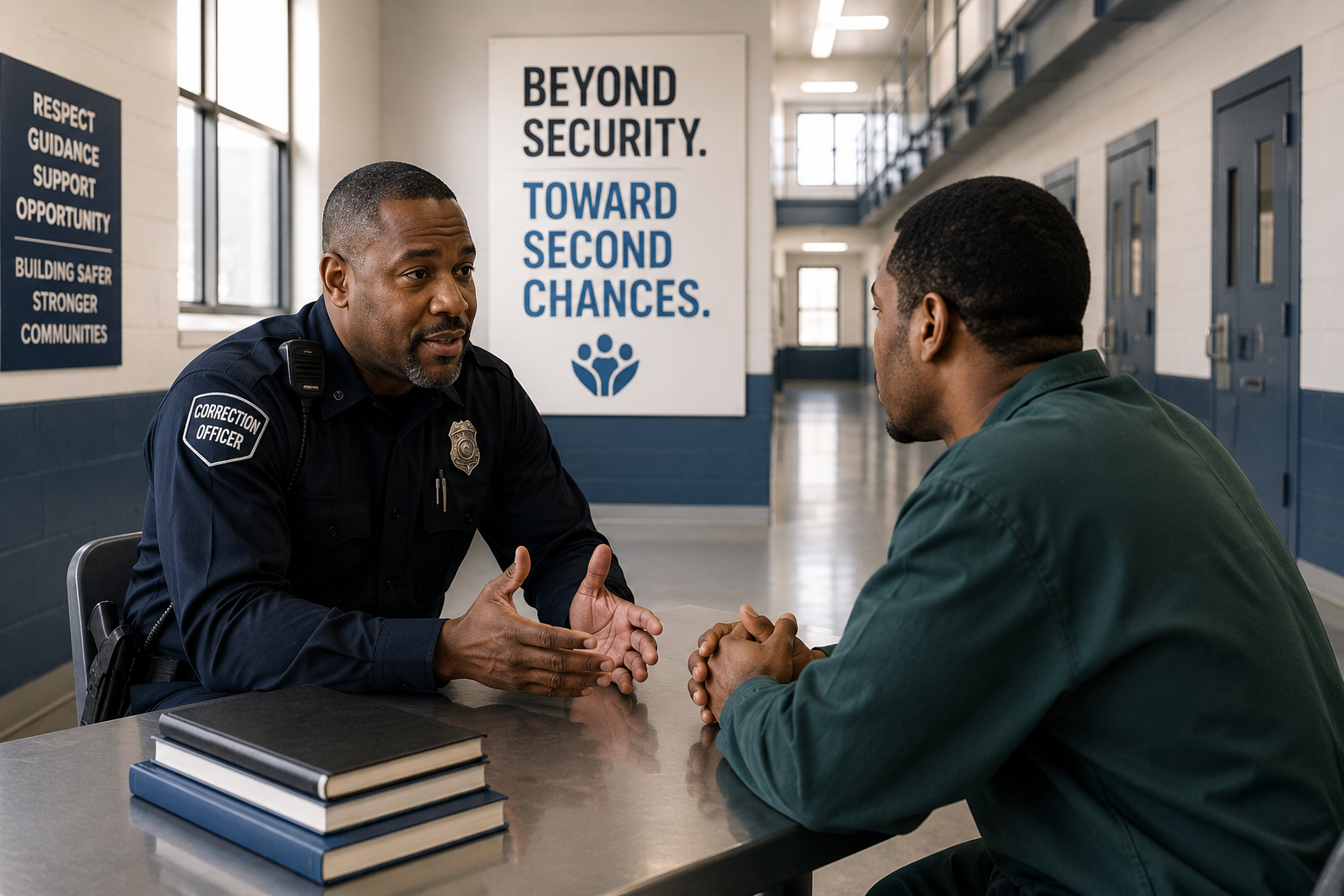
Our foundation advocates for a redefined role: Correction Officer as mental health worker, educator, counselor, and healthcare provider — not as a replacement for professional staff, but as an active, trained partner in rehabilitation. Officers who already hold relevant degrees and certifications are an underused resource sitting inside every facility in the country.

When officers are equipped, empowered, and encouraged to take part in education and work-release programming, everyone benefits. Facilities become safer. Incarcerated individuals gain access to consistent, trusted mentorship from people who are present every day — not just during scheduled program hours. And officers themselves gain a role that reflects the full scope of their training, rather than a narrow custodial mandate that leaves their skills on the sidelines.

Why Officers Have Been Left Out of Reform Conversations

For too long, Correction Officers have been on the outside looking in when it comes to designing reform. Policymakers consult academics, advocates, and formerly incarcerated individuals — all valuable voices — but rarely the officers who spend more waking hours with incarcerated populations than almost anyone else in the system. That has to change.

The Eli-Global Reform Foundation works to incorporate the resources that already exist inside correctional systems. When Correction Officers, educators, mental health professionals, and reentry specialists collaborate rather than operate in silos, rehabilitation stops being a program bolted onto the system and starts becoming part of its daily culture.

The Bigger Picture

Reimagining the Correction Officer’s role isn’t just good for morale — it’s a direct lever for reducing recidivism. Officers who are trained and empowered to support education, job readiness, and mental health become part of the bridge between incarceration and successful reentry, rather than simply the barrier between the incarcerated and the outside world.

This is what “putting correction back into the Department of Correction” looks like in practice.

Get Involved

We’re building partnerships with correctional professionals, unions, and policymakers who believe Correction Officers deserve a bigger seat at the reform table. If that’s a mission you believe in, we’d love your support.

Explore our priorities or donate to support this work.

What Is Generational Incarceration And How Do We End It?

When most people think about the criminal justice system, they picture a single person, a single sentence, and a single consequence. The reality is far more complicated. Incarceration in America is rarely an isolated event — it is a cycle that repeats itself across generations, moving from parent to child and often from child to grandchild. At the Eli-Global Reform Foundation, we call this pattern generational incarceration, and ending it is the singular mission behind everything we do.

Understanding the Cycle

Generational incarceration describes the pattern in which children of incarcerated parents face a significantly higher likelihood of becoming incarcerated themselves. The numbers are sobering: between 50 and 75 percent of incarcerated individuals report having a minor child, and research shows Black and Latino children are several times more likely than their white peers to experience a parent’s incarceration.

For these children, the effects reach far beyond a parent’s absence. They face disrupted schooling, economic hardship, social stigma, and psychological strain — challenges that compound over time and, without intervention, often lead them down the same path their parent walked. This is not a coincidence. It is a systemic failure that our foundation was built to interrupt.

Why “Correction” Has to Mean Correction

Our name carries a deliberate double meaning. We work to put “correction” back into the Department of Correction — not as a punitive label, but as a genuine commitment to rehabilitation. Having worked directly with incarcerated populations and their families in some of New York City’s toughest jails, our founders saw firsthand that punishment alone does not break the cycle. What breaks the cycle is education, job training, mental health support, and reconnecting incarcerated individuals with their families before they ever walk back through the front door.

A Two-Sided Approach: Inside and Outside

Ending generational incarceration requires action on two fronts simultaneously.

From the inside, we advocate for education and job-training programs inside correctional facilities, mental health and substance-abuse support for incarcerated individuals, and stronger, more supportive relationships between incarcerated parents and their children through improved, child-friendly visitation.

From the outside, we focus on the family members left behind — particularly children — who are often the hidden victims of the justice system. By connecting them to community resources, mentorship, and psychological support, we aim to catch the cycle in its earliest, most preventable years.

Why This Work Matters Now

Roughly 85 percent of incarcerated individuals will eventually return home. The question is not whether they come back — it’s what condition they come back in, and what kind of community welcomes them. Every dollar invested in education and job training inside a jail is a dollar that reduces recidivism, increases future employment and household income, and lightens the burden carried by the low-income communities that absorb the impact of mass incarceration.

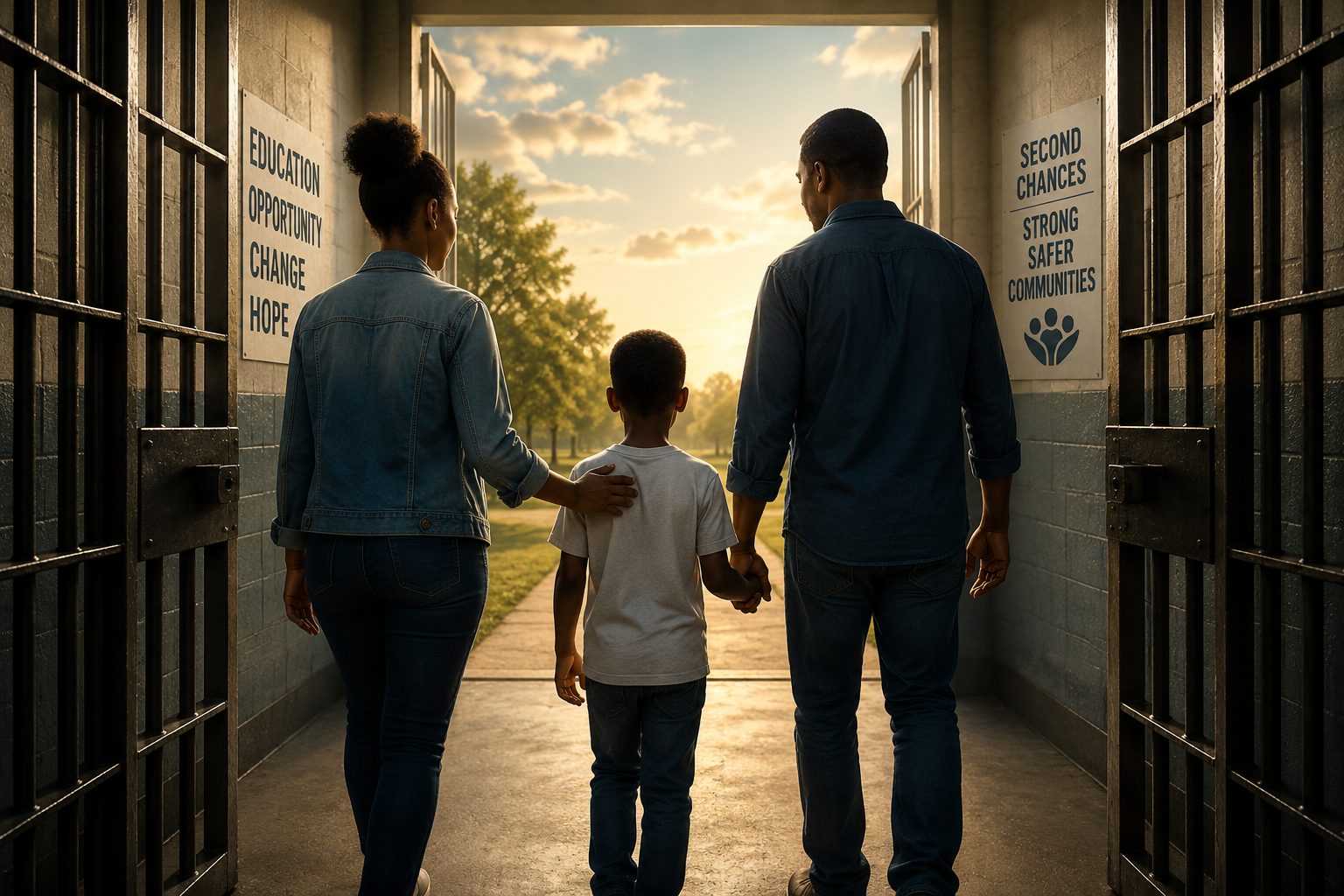
Generational incarceration is not inevitable. It is the product of gaps — in education, in mental health care, in family support, and in second chances. Our job is to bridge those gaps, one family at a time.

Join Us in Bridging the Gap

The Eli-Global Reform Foundation cannot do this work alone. Whether through advocacy, partnership, or direct support, every contribution helps us reach one more family before the cycle repeats itself.

Learn more about our mission or donate today to help us end generational incarceration, one family at a time.