 Eli Global RF
When most people think about the criminal justice system, they picture a single person, a single sentence, and a single consequence. The reality is far more complicated. Incarceration in America is rarely an isolated event — it is a cycle that repeats itself across generations, moving from parent to child and often from child to grandchild. At the Eli-Global Reform Foundation, we call this pattern generational incarceration, and ending it is the singular mission behind everything we do.
Understanding the Cycle
Generational incarceration describes the pattern in which children of incarcerated parents face a significantly higher likelihood of becoming incarcerated themselves. The numbers are sobering: between 50 and 75 percent of incarcerated individuals report having a minor child, and research shows Black and Latino children are several times more likely than their white peers to experience a parent’s incarceration.
For these children, the effects reach far beyond a parent’s absence. They face disrupted schooling, economic hardship, social stigma, and psychological strain — challenges that compound over time and, without intervention, often lead them down the same path their parent walked. This is not a coincidence. It is a systemic failure that our foundation was built to interrupt.
Why “Correction” Has to Mean Correction
Our name carries a deliberate double meaning. We work to put “correction” back into the Department of Correction — not as a punitive label, but as a genuine commitment to rehabilitation. Having worked directly with incarcerated populations and their families in some of New York City’s toughest jails, our founders saw firsthand that punishment alone does not break the cycle. What breaks the cycle is education, job training, mental health support, and reconnecting incarcerated individuals with their families before they ever walk back through the front door.
A Two-Sided Approach: Inside and Outside
Ending generational incarceration requires action on two fronts simultaneously.
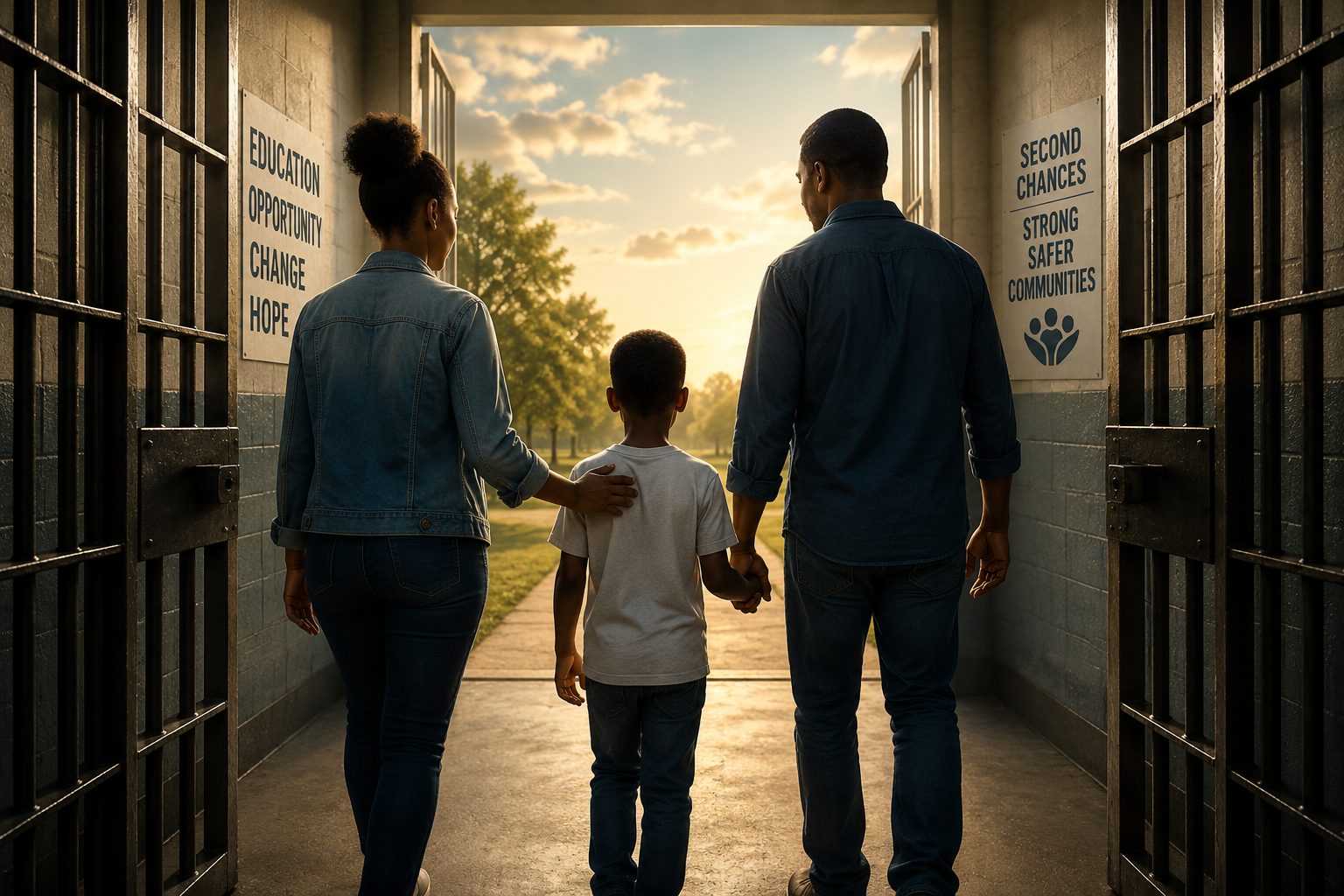
From the inside, we advocate for education and job-training programs inside correctional facilities, mental health and substance-abuse support for incarcerated individuals, and stronger, more supportive relationships between incarcerated parents and their children through improved, child-friendly visitation.
From the outside, we focus on the family members left behind — particularly children — who are often the hidden victims of the justice system. By connecting them to community resources, mentorship, and psychological support, we aim to catch the cycle in its earliest, most preventable years.
Why This Work Matters Now
Roughly 85 percent of incarcerated individuals will eventually return home. The question is not whether they come back — it’s what condition they come back in, and what kind of community welcomes them. Every dollar invested in education and job training inside a jail is a dollar that reduces recidivism, increases future employment and household income, and lightens the burden carried by the low-income communities that absorb the impact of mass incarceration.
Generational incarceration is not inevitable. It is the product of gaps — in education, in mental health care, in family support, and in second chances. Our job is to bridge those gaps, one family at a time.
Join Us in Bridging the Gap
The Eli-Global Reform Foundation cannot do this work alone. Whether through advocacy, partnership, or direct support, every contribution helps us reach one more family before the cycle repeats itself.
Learn more about our mission or donate today to help us end generational incarceration, one family at a time.