 Eli Global RF
Ask most people what a Correction Officer does, and they’ll describe a job about custody and control — locking doors, running counts, keeping order. That description was accurate decades ago. It is no longer the whole story, and at the Eli-Global Reform Foundation, we believe it’s time the system caught up with the people who actually work inside it.
A More Educated Workforce Than Ever Before
Since 1999, jurisdictions like New York have required a minimum of sixty college credits or an associate degree to become a Correction Officer. Today’s officers frequently hold degrees and specialized training in education, criminal justice, child development, and mental health. This generation of Correction Officers is, by credentials alone, one of the most educated in the country’s history.
Yet the job description hasn’t caught up with the workforce. Officers are still primarily defined by “Care, Custody, and Control” — a framework written for a different era, one that underuses the very skills these professionals now bring to the job.
From Custodian to Counselor
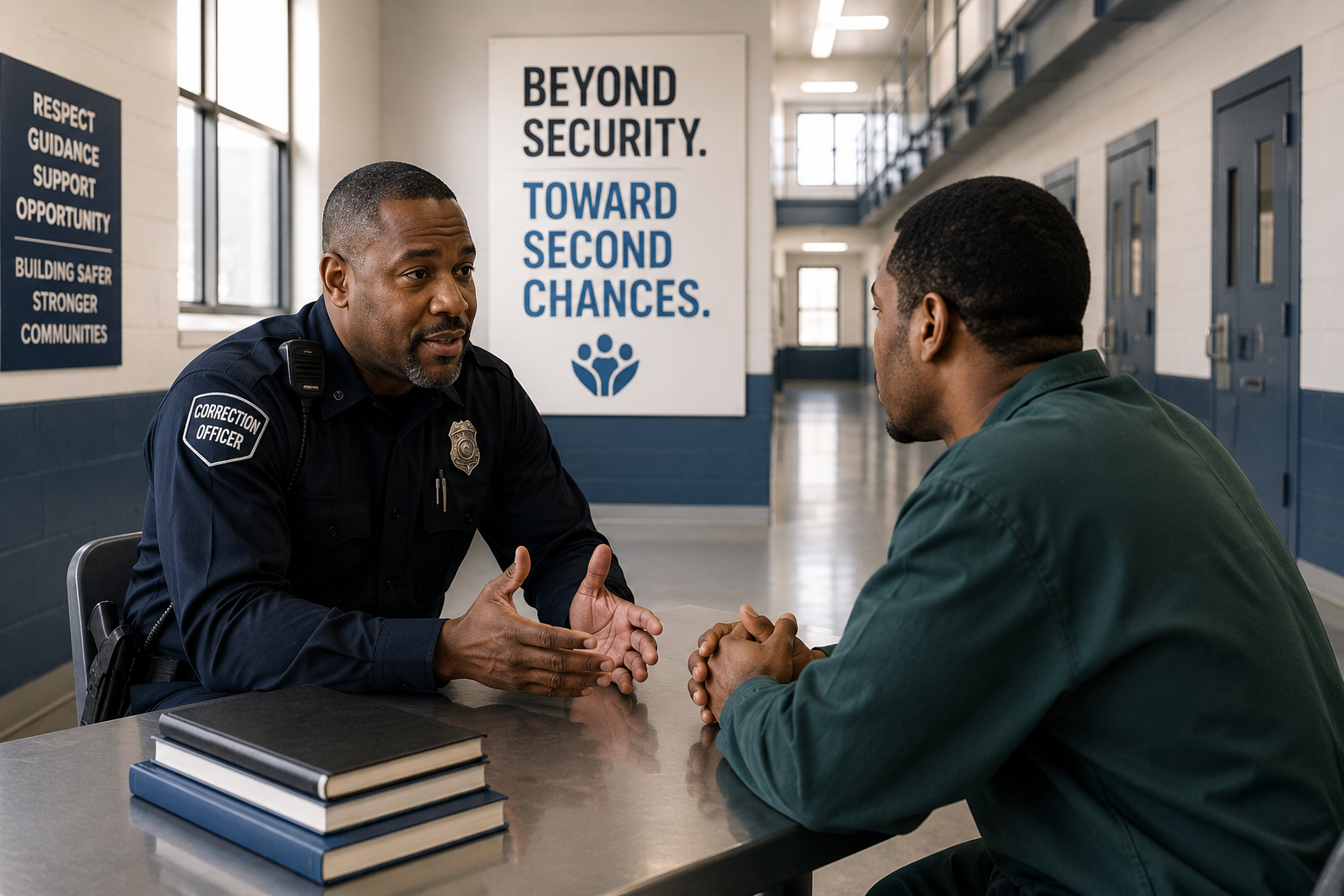
Our foundation advocates for a redefined role: Correction Officer as mental health worker, educator, counselor, and healthcare provider — not as a replacement for professional staff, but as an active, trained partner in rehabilitation. Officers who already hold relevant degrees and certifications are an underused resource sitting inside every facility in the country.
When officers are equipped, empowered, and encouraged to take part in education and work-release programming, everyone benefits. Facilities become safer. Incarcerated individuals gain access to consistent, trusted mentorship from people who are present every day — not just during scheduled program hours. And officers themselves gain a role that reflects the full scope of their training, rather than a narrow custodial mandate that leaves their skills on the sidelines.
Why Officers Have Been Left Out of Reform Conversations
For too long, Correction Officers have been on the outside looking in when it comes to designing reform. Policymakers consult academics, advocates, and formerly incarcerated individuals — all valuable voices — but rarely the officers who spend more waking hours with incarcerated populations than almost anyone else in the system. That has to change.
The Eli-Global Reform Foundation works to incorporate the resources that already exist inside correctional systems. When Correction Officers, educators, mental health professionals, and reentry specialists collaborate rather than operate in silos, rehabilitation stops being a program bolted onto the system and starts becoming part of its daily culture.
The Bigger Picture
Reimagining the Correction Officer’s role isn’t just good for morale — it’s a direct lever for reducing recidivism. Officers who are trained and empowered to support education, job readiness, and mental health become part of the bridge between incarceration and successful reentry, rather than simply the barrier between the incarcerated and the outside world.
This is what “putting correction back into the Department of Correction” looks like in practice.
Get Involved
We’re building partnerships with correctional professionals, unions, and policymakers who believe Correction Officers deserve a bigger seat at the reform table. If that’s a mission you believe in, we’d love your support.